

Asian Handicap pro dee 168 introduces football fans to a market that evaluates team performance through an adjusted score rather than the final result alone. Understanding this system requires knowledge of positive and negative handicaps, decimal odds, and the conditions under which a selection wins, loses, or receives a refund. By learning how different lines work and examining relevant match statistics, readers can interpret football markets more clearly. This guide explains the essential rules, practical examples, and risk considerations behind Asian handicap markets.
What Is Asian Handicap pro dee 168?
Asian Handicap pro dee 168 refers to the Asian handicap concept in football, where one team receives a virtual goal advantage or disadvantage before the result is calculated for settlement. The handicap does not change the real score displayed during a match. Instead, it provides a separate calculation for the selected market.
Unlike a traditional three-way result market, an Asian handicap generally offers two opposing selections. Depending on the line, the settlement may produce a full win, full loss, refund, half win, or half loss. Knowing these possibilities helps readers understand why the same final score can produce different outcomes for different handicap selections.

Positive and Negative Handicap Lines
A negative handicap is normally assigned to the favorite, while a positive handicap is generally given to the underdog. For example, Team A -0.5 must win the match for the selection to win. Team B +0.5 wins if Team B either draws or wins.
Asian Handicap pro dee 168 is easier to interpret when the handicap is applied to the selected team’s score before comparing it with the opponent’s score. This adjustment is virtual; the official match result remains unchanged.
Full-Goal, Half-Goal, and Quarter-Goal Lines
Full-goal handicaps include lines such as -1 and +2. When the adjusted score is level on a whole-goal line, the stake is generally returned. A -1 selection, for instance, requires the favorite to win by more than one goal for a full win.
Half-goal lines, such as -0.5 and +1.5, cannot produce a push. Quarter-goal lines, including -0.25 and +0.75, split the stake between two neighboring handicap positions. This structure allows a half win or half loss depending on the final margin. Exact settlement terms can vary by operator, so the applicable rules should always be checked.
A Simple Match Example
Imagine Team A faces Team B and the selected handicap is Team A -1. If Team A wins 2–0, the adjusted score favors Team A by one goal and the selection wins. If Team A wins 1–0, the adjusted score is level and the stake is generally refunded. If the match ends 1–1, the selection loses.
These examples show why the actual score alone is not enough to evaluate a handicap result. Readers should identify the exact line before drawing conclusions about the settlement.
How to Read Handicap Lines and Football Odds
Reading Asian Handicap pro dee 168 involves comparing the handicap with the odds offered for each side. The handicap represents the goal adjustment, while the odds indicate the price associated with a selection. Neither element guarantees the eventual match result.
A useful analysis combines market information with team statistics, lineup news, and the circumstances surrounding the fixture. Odds should be compared on equivalent lines and at similar points in time; otherwise, apparent differences may reflect different market conditions rather than better value.

Interpreting Decimal Odds
Decimal odds show the total return per unit staked when a selection wins, including the original stake. For example, odds of 2.00 correspond to a gross return of 20 units from a winning 10-unit stake. The net profit would be 10 units.
The reciprocal of decimal odds gives a basic implied probability. At 2.00, this is 50% before accounting for the bookmaker’s margin. This figure is not necessarily the true probability of the outcome, and quarter-goal settlement rules make a complete evaluation more complicated than simply calculating a win percentage.
Comparing Lines and Market Movement
A handicap may change as team news emerges or market prices are adjusted. A favorite moving from -0.5 to -0.75 is being assessed under a different handicap, so the odds cannot be compared fairly without considering the line change.
When evaluating Asian Handicap pro dee 168, record both the price and the handicap. Also consider when the quote was captured, whether it refers to pre-match or live betting, and whether the underlying market is identical. A changing line is information to investigate, not proof that a prediction will succeed.
Assessing Form, Lineups, and Match Statistics
Recent results provide context, but they should not be treated as a complete prediction model. Review goals scored and conceded, the strength of recent opponents, home and away performance, defensive consistency, and the quality of chances created where reliable statistics are available.
Injuries, suspensions, tactical adjustments, fixture congestion, and recovery time can also affect a team’s performance. Information from sources such as MM99 should be checked for relevance, consistency, and freshness rather than accepted solely because it supports an initial opinion.
Analysis, Risk, and Responsible Decisions
A structured approach to Asian Handicap pro dee 168 begins with understanding the market and acknowledging its uncertainty. Statistical comparisons can organize available information, but football remains unpredictable. A strong team can underperform, an underdog can defend effectively, and a single incident can change a match.
Readers should focus on interpreting the evidence correctly instead of searching for a guaranteed selection. Clear records, careful comparisons, and predefined limits are more useful than impulsive decisions based on recent wins or losses.
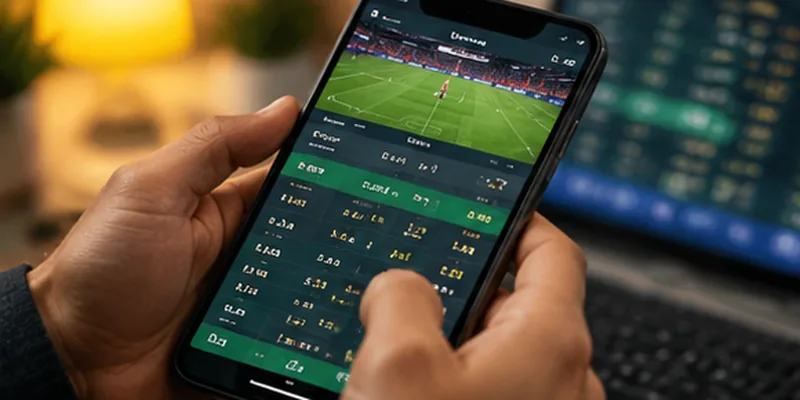
Check the Rules Before Interpreting Results
Different handicap lines can produce different settlements from the same score. A whole-goal line may return the stake when the adjusted score is level, while a half-goal line always results in a win or loss. Quarter-goal lines divide the stake between two adjacent positions.
Before using a betting service, read its market rules, confirm whether live selections apply to the remaining match time or another defined period, and verify how abandoned or postponed matches are handled. Do not assume that every operator uses identical conditions.
Keep Financial Risk Within Clear Limits
Anyone who participates where legally permitted should set a fixed entertainment budget and avoid using money needed for housing, food, bills, or other essential expenses. Never borrow money to gamble or increase a stake simply to recover a previous loss.
Asian Handicap pro dee 168 should be approached as an explanation of a football market, not a promise of income. Taking breaks and stopping when the predetermined limit is reached can help keep gambling from creating unnecessary financial or personal pressure.
Avoid Common Analytical Mistakes
One common mistake is assuming that a favorite will cover a negative handicap simply because it has won several recent matches. Another is comparing two prices without checking whether they use the same handicap. Both errors can lead to conclusions that overlook important details.
A simple match-analysis record can include the selected line, the odds observed, relevant team news, the reasoning behind the assessment, and the final result. Reviewing these records can help identify inconsistent assumptions. Sources such as MM99 should be compared with other reliable information, with particular attention to data accuracy and publication time.
Conclusion
Asian Handicap pro dee 168 is best understood by separating the official score from the adjusted score used for settlement. Learning positive and negative lines, full-, half-, and quarter-goal rules, and the meaning of decimal odds provides a stronger foundation for reading football markets. Team statistics and current lineup information can add context, but they cannot eliminate uncertainty. Always verify the applicable rules and maintain responsible financial limits.